
BC Large-Vehicle Blind Spots: How Learners Should Share the Road
A practical BC Class 7 guide to staying visible around buses, trucks, and other large vehicles by leaving space, reading mirrors, and avoiding squeeze points.
Updated:
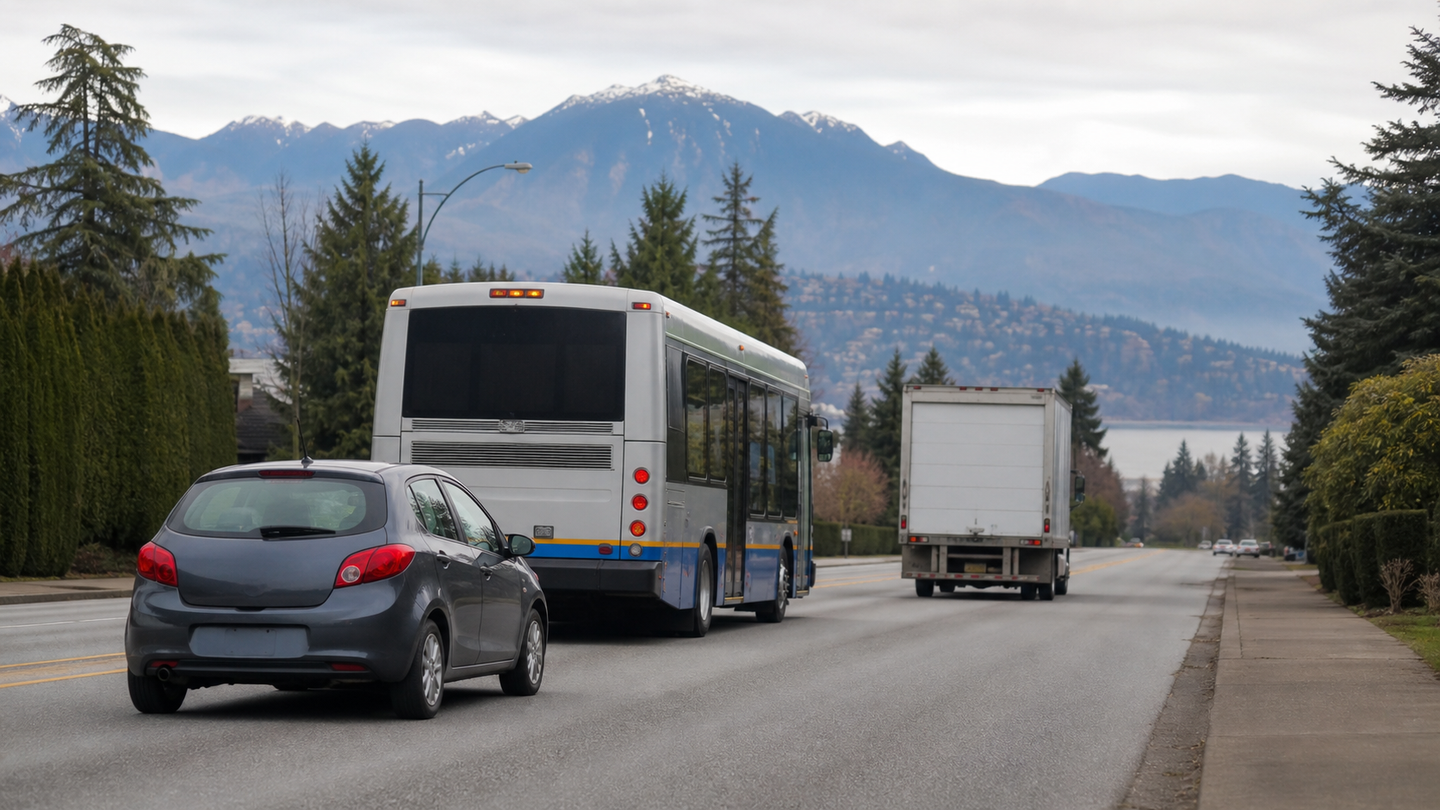
In British Columbia, learner drivers meet buses, delivery trucks, RVs, and work vehicles on city streets and highways. The exam habit is to manage space before the situation feels tight.
Give the driver a way to see you
A large vehicle has bigger blind areas than a small car. If you are close behind, beside the rear wheels, or tucked near a turn, the other driver may not have a useful view of you. Keep a position where the vehicle's mirrors and movement are easy to read.
Leave extra space before turns and stops
Buses and trucks may slow early, swing wider, or need more room to complete a turn. Do not rush into the gap beside them at an intersection or driveway. For the knowledge test, treat space as a safety tool, not as unused road you should fill.
Pass only when the whole move is clear
Passing a large vehicle should be a short, planned move. Check mirrors, shoulder check, signal, and make sure there is enough room ahead before you move out. If traffic will trap you beside the vehicle, wait behind it where you can keep a steady following distance.
Expect spray, wind, and blocked views
Rain spray, a trailer, or a tall bus can hide pedestrians, cyclists, and traffic ahead. Slow down enough to rebuild your view before making a lane change or turn. The exam takeaway is simple: when your view is blocked, reduce speed and create more time.
Quick answers
Is it wrong to drive beside a large vehicle in BC?
It is not always wrong, but it is risky to linger there. If you need to pass, do it only when the lane, speed, and space ahead let you complete the pass smoothly. Otherwise stay back where you are visible and predictable.
What should I remember for the ICBC knowledge test?
Remember the pattern: large vehicles need more room, have larger blind areas, and can block your view. Choose answers that protect space, improve visibility, and avoid squeezing beside a turning or slowing vehicle.